


Mansion House Dublin, residence of The Lord Mayor
Over to Ireland recently to my hometown of the Fair City of Dublin for some special times with some special people. The Fair City has taken an economic battering as the Celtic Tiger turned into a scabby moggy and it shows; Hotels closed down, retail difficult and banks becoming mausoleums to broken dreams.

Powerscourt House, South William Street
However inspiration can still be found for Ireland knows about adversity and reinvention. So around my old “parish” of the South William St. Rag Trade area there is a very definite fight back with Project 51 Fashion Co-Operative and clever businesses such as Clement & Pekoe opening up. We gathered, including an old friend I hadn’t seen in over 30 years, to welcome Jessie on the Friday to take in the atmosphere of O'Donoghue's and Foleys in Merrion Row and enjoy the Craic, caint, rince, amhránaí agus ceol - Conversation, dance, song and music.
The one, the only, the unique Jessie Noble Cowan singing “Caledonia” ably backed by the dynamic duo of The Harrington’s. Is maith an cailín!
One of New York’s finest who was intimately involved in the events of 9/11 and afterwards ten years ago we were honoured she had chosen to be us at this time. There was time also to catch up with folks and other friends and travel down to Edenderry for the first time in four years. All this and a Ryanair flight that got back early to the UK before scraggy end of Hurricane Katia hit. Special places, special people, special times to remember and share.

So I thought I’d pick out some of my favourite spots in Dublin and give you an insight into the some of the new ventures which are part of Ireland’s fightback against economic adversity. South William Street is the centre of the interesting area between the affluence of Dublin’s Grafton Street and the somewhat down at heel South Great George’s Street. It includes Powerscourt Townhouse Centre and the South City Markets. This has always been an interesting area keeping much of its Georgian and Victorian buildings despite a few ill advised intrusions.

Castle Market

In truth what preserved it was the poverty of Dublin in the 20th Century and the colour was lent to it by it becoming the hub of the “Rag Trade” a business activity known for its colourful and entrepreneurial characters. Indeed when I was around Dublin businesses used to start and fold but strangely the same people always seemed to be around. In those days Provincial buyers and used to come up to Dublin to order their next season’s stock and they would walk around the “block” of Sth. William Street and Drury Street to call on the rag trade showrooms and agents.

Busyfeet and Coco
That type of business is largely gone but the old showrooms, warehouses and Georgian buildings are now attracting a new generation into the Café Quarter. One such place is a bustling café owned by my buddy Emma which resplends in the title of Busyfeet and Coco and occupies the busy corner between Chatham and South William Streets @ 41/42 South William St. Dublin 2. One of a (thankfully) growing number of places where you can go after work without drinking alcohol or ordering an expensive meal, Busyfeet and Coco is a pretty compact little place - normally, this would mean you could either talk quietly or about things you don't mind the whole world knowing, but the dark and atmospheric lighting makes it safe to gossip in during the evening. Staffs are invariably friendly and it was one of Dublin’s first Fairtrade café’s. The menu is straightforward but the food here is good - tasty sandwiches, wraps and soups are ideal for informal eating. Some evening, especially at weekends, there are lively music sessions and there are outdoor tables for serious people watching.

Project 51
It was Dublin Fashion week when I was there and further up the street Eoin McDonnell (owner of www.Precious.ie – diamond and wedding ring specialists) was launching a new Irish Designer Collective store, Project 51 located at 51 South William St Dublin 2. There are 15 Irish designers involved in the new concept which is devoted to providing its customers the very best from high end luxury Irish goods. Housed in a 19th Century Georgian building Project 51 - Irish Design Collective – is a High End NYC Soho style luxury boutique filled with the Best of Irish fashion, jewellery, millinery, accessories and furniture. Project 51 offers the ultimate shopping experience in a relaxed friendly atmosphere. Customers can choose from an amazing selection of luxury goods, from engagement rings to bridal wear, jewellery, evening wear, tailoring, millinery and luxury leather bags.


Project 51 is bringing an international concept to Ireland: establishing a creative-fashion-design hub to showcase Irish design and provide the designers with the opportunity to offer unique designs to the public. There is the other factor in these straitened times that by purchasing in an Irish owned boutique you can contribute significantly to the Irish economy! For every 100 spent in a multinational store only 14 goes back into the local economy versus 45 through an Irish owned shop (figures courtesy www.DCBA.ie )
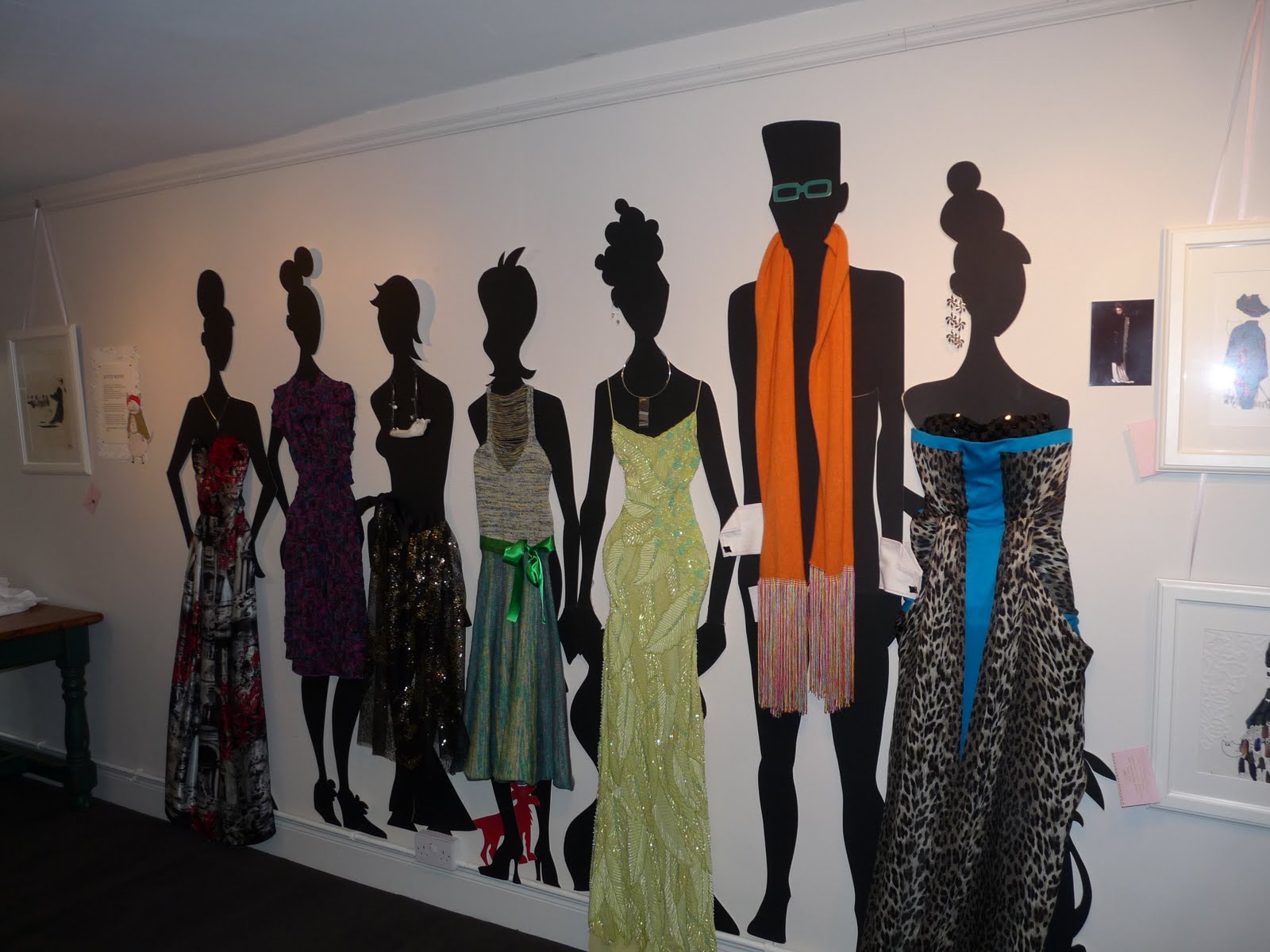
According to Jennifer Rothwell one of Ireland’s top designers involved in the store, “South William Street was always filled with the business end of the Rag Trade and now it is being reclaimed. It’s time for the rebirth of South William St once again as the Fashion Centre of Dublin!” The designers involved also intend to make an international impact, to increase the profile of Irish design internationally with an emphasis on high quality and innovative design. Their aim is to achieve the same level of international recognition as the “Antwerp Six”, a group of influential avant garde fashion designers who graduated from Antwerp’s Royal Academy of Fine Arts between 1980-1981. The fashion collective presented a distinct, radical vision for fashion during the 1980s that established Antwerp as a notable location for fashion design. It is lovely to see the pride with which No. 51 has been converted into a fashion showcase with a workshop and beautiful display areas including one mocked up as an avant garde dining room.
http://www.project51.ie/
Next door at No. 50 I bumped into Simon Cummins putting the finishing touches to the new showroom and Coffee House for his company specialising in really fine teas and coffees, Clement and Pekoe. The Clement in the name is of course Pope Clement VIII! Coffee aficionados often claim that the spread of its popularity is due to Pope Clement VIII's influence. Being pressured by his advisers to declare coffee the "bitter invention of Satan" because of its popularity among Muslims and it being a sort of antithesis or substitute for wine (which was used in the Eucharist), upon tasting it he instead declared that, "This devil's drink is so delicious...we should cheat the devil by baptising it." The year often cited is 1600. It is not clear whether this is a true story or not, but it may have been found amusing at the time.


Clement and Pekoe
Clement & Pekoe are passionate about loose leaf Tea & freshly roasted Coffee and they have a wonderful selection. They source the finest pickings from all over the world and their luxury gift boxes are an ideal gift for Christmas, Birthdays and other celebrations which you can personalise & they can deliver directly to them. Their website is a mine of information on black, white and green teas and coffee varieties and now that their South William Street premises are open you can sample these exotic oriental beverages and raise a sober toast to Clement VIII, the habit of toasting Popes having fallen into disuse in modern Ireland!
http://www.clementandpekoe.com
Strolling onwards to the top of South William Street you cross Dublin’s wide Dame Street by the piazza surrounding architect Sam Stephenson’s outstanding Central Bank Building and my old studio master Eamonn O’Doherty’s “Tree of Gold” on the Central Bank Plaza.
http://daithaic.blogspot.com/2011/08/eamonn-odoherty.html
Now Sam Stephenson had many faults but he was hugely talented and energetic designer and along with Arthur Gibney ran Ireland’s most successful architectural practice. What he did here at least was a work of some brilliance; hanging the great bulk of the Central Bank offices like as suspension bridge from wires suspended from a steel umbrella leaving wide and open plaza underneath brilliantly creating a new public space and circulation route into Temple Bar and across the Halfpenny Bridge on the River Liffey where none existed before. He further accentuated the contrast between old and new by reconstructing the landmark 18th C Ouzel Galley building, which used to face onto Dame Street, so that it faced onto the plaza to act as a foil to the unabashed modernity of the radical Central Bank. How depressing today it is to see Sam’s architectural vision and the openness of this space being damaged by the Central Bank being surrounded by truly hideous and inept repro Georgian railings.

The timeless surroundings of upstairs in Neary's Bar, Chatham Street

Beweley's Oriental Cafe Grafton Street with its Egyptian Revival facade
Ignore this travesty and behind the Central Bank you will find Cope Street and down a mysterious archway one of Dublin’s most interesting retail outlets with its continuously changing displays The Graphic Studio Gallery. Opened in 1988 and now based in Temple Bar this impressive gallery space is used for the sale and exhibition of fine art prints. The staff are happy to give visitors information on the art of print making, or to offer advice on selecting a work of art whether buying for investment or purely for pleasure. With over 3,000 works to choose from, with work by leading Irish and international artists, you can begin your own art collection for as little as €90!
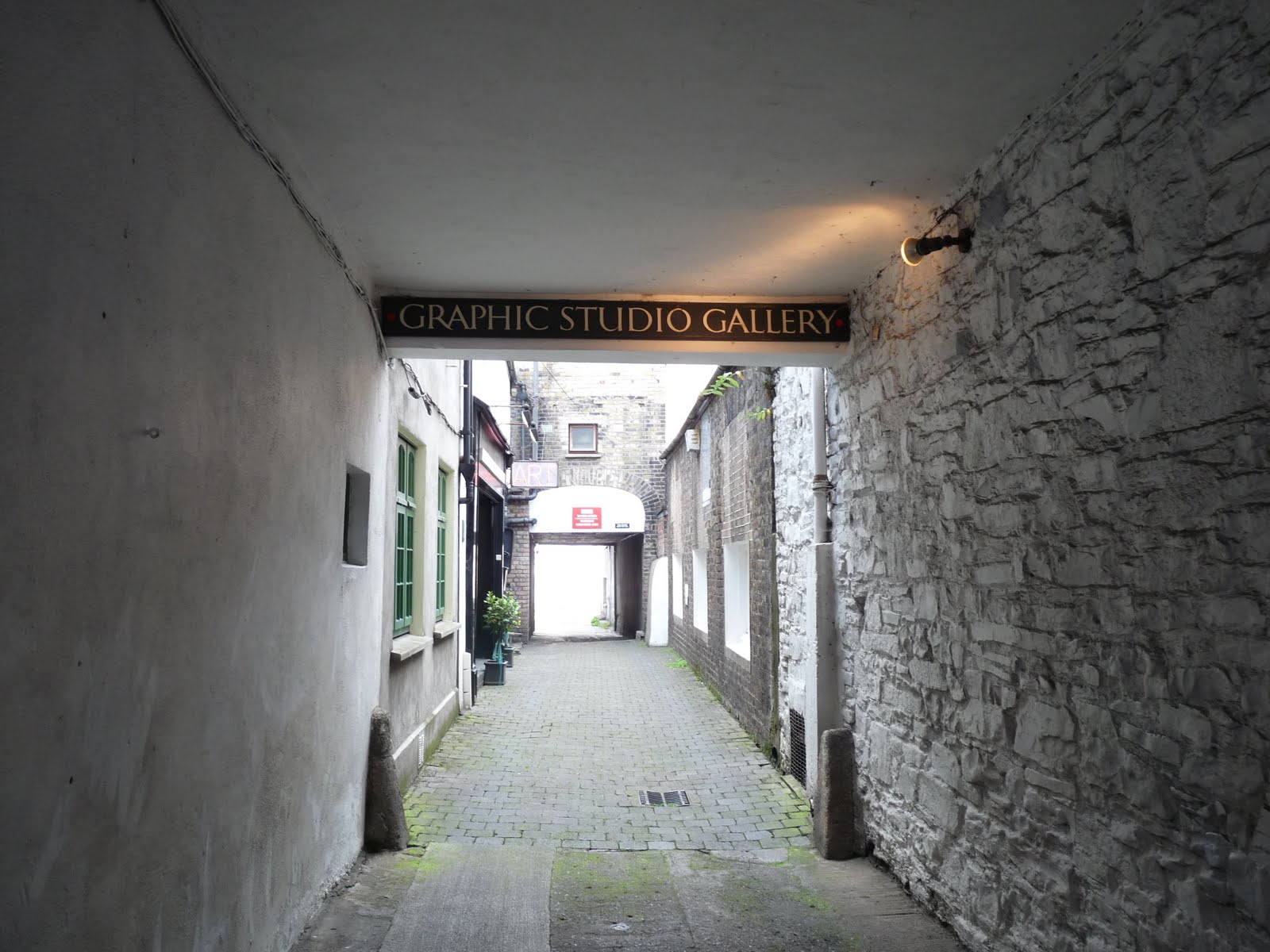

The Graphic Studio Gallery
The gallery in Temple Bar is one arm of Graphic Studio Dublin, which also includes a studio off the North Circular Road. Together they form a non-profit organisation supporting artists and promoting the medium of fine art printmaking. Graphic Studio Gallery is the oldest gallery in Dublin dealing exclusively in original contemporary fine art prints. The gallery's stock includes etchings, lithographs, woodblocks, screenprints, monoprints and carborundum prints by over 200 Irish and international artists. Artists who have exhibited here include: Hugh O’Donoghue, Martin Gale, Seán Mc Sweeney, Richard Gorman, Tony O'Malley, Michael Cullen, Charlie Cullen, Elizabeth Blackadder, William Crozier, Felim Egan, Gwen O'Dowd and Stephen Lawlor. When I was there it was showcasing an exhibition by renowned printmaker and watercolourist, Pamela Leonard with a selection of her works spanning 20 years to date. A graduate of NCAD Leonard is especially renowned for her landscapes. Her works explore light and dark and focuses on capturing these elements in forests and glades.
The Graphic Studio has been a valuable support and catalyst for many Dublin artists who I knew in its early days. I knew the Gallery from its very inception when the irrepressible and talented Mary Farl Powers was the driving force – sadly Mary died way too young in 1992 at the age of 43. It gives me great pleasure today to see it being run with such élan by my great buddy Catherine ably and knowledgably assisted by Paula. If you want to invest in great value Irish Art and support emerging Irish Artists avoid the commercial galleries and make a bee line for here.
http://www.graphicstudiodublin.com/gsg/exhibitions/index.html
Beyond the Gallery lies Temple Bar well known to visitors and one of the reasons why Dublin is one of the most popular City Break destinations in Europe. It is promoted as "Dublin's cultural quarter" and has a lively nightlife that is popular with tourists. Unlike the areas surrounding it, Temple Bar has preserved its medieval street pattern, with many narrow cobbled streets. During the 19th century, the area slowly declined in popularity, and in the 20th century, it suffered from urban decay, with many derelict buildings. Its unfashionability probably saved it from Dublin's property developers, who destroyed much of the city's historic architecture during the 1960s. So today you will find remnants of pre-Georgian buildings built by Huguenots in the “Dutch Billy” style with Dutch gables, central fire-breasts acting as structural supports, panelled interiors and box sash windows.


Temple Bar and a genuine Leprechaun, really, really........
http://archiseek.com/2011/dublins-dutch-billys-the-conference/
The area is bounded by the Liffey to the north, Dame Street to the south, Westmoreland Street to the east and Fishamble Street to the west. It probably got its name from the Temple family, who lived in the area in the 17th century; Sir William Temple, provost of Trinity College Dublin in 1609, had his house and gardens here. However it got its name, the earliest historical reference to the name Temple Bar is on a 1673 map.

Bad Ass Cafe, Crown Alley
Fishamble Street in Temple Bar was the location of the first performance of Handel's Messiah on 13 April 1742. An annual performance of the Messiah is held on the same date at the same location. The republican revolutionary group, the Society of the United Irishmen, was formed at a meeting in a tavern in Eustace Street in 1791.
See;
http://daithaic.blogspot.com/2008/12/xmas-is-coming-to-dublin.html
However returning to this area today with its bustling cafes, bars, restaurants, night clubs and funky shops I find myself like the Irish Alcoholic drowning in a vat of Guinness; I have mixed feelings. First up the trite Disneyesque vision of Dublin presented to visitors is a turnoff, Leprechaun “characters” grubbing for the tourist pound by offering photo-ops and “Whiskey in the jar” being belted out at three in the afternoon from “traditional” pubs has something of the theme park about it. No matter what overpriced slop is served up in these establishments their scrotum burgers and cheeps are invariably labelled “Irish home cooking.” It can’t have been a very good home and I won’t be unfair to Disney; they would have done it far better.


Central Bank Building from Crown Alley
The other more significant reason for my unease is I remember many friends and acquaintances who started up great new businesses in the area and were invariably pushed out when it was redeveloped by Temple Bar Properties with public funds and gradually gentrified. In the 1980s, the state-owned transport company Córas Iompair Éireann proposed to buy-up and demolish property in the area and build a bus terminus in its place. In the best traditions of waste by Irish public bodies this “Transport Solution” was never designed, approved or, heavens forbid, actually budgeted for!

Regent Hairdressers, Temple Bar
While this was in the planning stages, the purchased buildings were let out at low rents, which attracted small shops, artists and galleries to the area. Protests by An Taisce, residents and traders led to the cancellation of the bus station project, and the then Taoiseach Charles Haughey was responsible for securing funding and, in 1991, the government set up a not-for-profit company called Temple Bar Properties to oversee the regeneration of the area as Dublin's cultural quarter.

Brindley Printhouse, Temple Bar now the Ark Children's Cultural Centre
Today the area is the location of many Irish cultural institutions, including the Irish Photography Centre (incorporating the Dublin Institute of Photography, the National Photographic Archives and the Gallery of Photography), the Ark Children's Cultural Centre, the Irish Film Institute, incorporating the Irish Film Archive, the Temple Bar Music Centre, the Arthouse Multimedia Centre, Temple Bar Gallery and Studio, the Project Arts Centre, the Gaiety School of Acting, IBaT College (City Centre), as well as the Irish Stock Exchange and the Central Bank of Ireland.

The Oliver St John Gogarty Pub in Temple BarAfter dark, the area is a major centre for nightlife, with many tourist-focused nightclubs, restaurants and bars. Pubs in the area include The Porterhouse, the Oliver St. John Gogarty, the Turk's Head, the Temple Bar, Czech Inn (in the former Isolde's Tower), the Quays Bar, the Foggy Dew, Eamonn Doran's and the Purty Kitchen (formerly Bad Bobs and before that the really excellent Granary, run by the Byrne family).


Dublin Bikes
Two squares have been renovated in recent years — Meetinghouse Square and the central Temple Bar Square. The Temple Bar Book Market is held on Saturdays and Sundays in Temple Bar Square. Meetinghouse Square, which takes its name from the nearby Quaker Meeting House, is used for outdoor film screenings in the summer months. Since summer 2004, Meetinghouse Square is also home to the Speaker's Square project (an area of Public speaking) and to the Temple Bar Food Market every Saturday.


As for Dublin itself Ireland’s financial woes have hit hard. Job opportunities are scarce and emigration is a factor once again and as always it is the young, enterprising and able who are in the vanguard of this pernicious but traditional Irish export. Property prices have crashed as they head towards reality. A striking example when I was there was one of Dublin’s landmark pubs, John Doyle’s at Doyle’s Corner. It sold in 2006 for €4.2 M, today it is back on the market “asking” €850,000 – 20% of its value a mere 5 years ago. It is almost inevitable that due to the bravado and economic incontinence which led to the Irish Government guaranteeing ALL of the Irish Bank’s debt that Ireland will default on its unsustainable bailout – the guarantee made bank debt sovereign debt – not v. Clever.
http://daithaic.blogspot.com/2011/02/terrible-default-is-born.html
The extent of the banking collapse was brought home to me when I went into the National Irish Bank on College Green, opposite where Barrack Obama had made his stirring speech some months earlier.
http://daithaic.blogspot.com/2011/05/there-is-none-as-irish-as-barry-obama.html
It is the bank’s head branch and before that was the headquarters of The Hibernian Bank whose initials are still carved in the elaborate ceiling of its cavernous banking hall with its high Victorian marble pillars and 150 foot mahogany banking counter. I had an account here many years ago and you would have over 30 staff busy on the banking floor serving customers. I wandered in looking for an ATM and just clocked the notice that “National Irish Bank” was now a subsidiary of Danske Bank and this was now a “cashless branch”, not a concept I’ve come across but I presumed it meant there were automated ATM, deposit machines and such like. I presumed wrongly for the contrast with the bank I was last in 20 years ago was incredible. Not an ATM in sight and indeed in this huge space not one staff member behind the impressive counter. Instead in the cavernous but empty public space in front of the counter was a cheap desk and behind it serving a queue of six people were two really young staff members processing “cashless” transactions with not a computer in sight. It was the strangest bank branch I’ve been in a long time, a sort of Mausoleum to the Ghost of Banking past.

Ceiling - National Irish Bank with the Hibernian Banks monogram in the plaster
But around Dublin there is an air of unreality which echoes Brendan Behan’s comment that “The Irish are very popular with themselves!” Buoyed up by Unemployment Benefit of €184 per week, twice the rate it is in a poor country like Germany, the posing classes of Dublin slurp a slow Beaujolais outside the Bailey, buy Manuka Honey at €15 a jar in Fallon & Byrne and spend €6.50 on a pint to dull the pain. Every idle person is involved in a project which consists of some contrived reworking of public subsidy whilst working on their “first novel.” Dublin must have the highest ratio of unpublished first novels per inhabitant in the world. Reading the papers they have lost none of their appetite for self important pontificating reinforcing Behan’s other observation that “they are a nation of master debaters.” The visits by the Queen and Barrack Obama have obscured a certain reality – Ireland you are economically insignificant and the rest of the World truly does not want to bail you out of the mess created by your own Gombeenism.

Terminal 2 @ Dublin Airport, a snip at €1.2 Billion
The cost base is still far too high caused by the ludicrous levels of social support which disincentivise employment and effort and the stranglehold of state owned monopolies in energy and healthcare which are expensive conspiracies against the users. The third “Insurance Levy” in 23 continuous years of stupidity has now been imposed on insurance premiums to pay for stupidity and lack of regulation and all the major banks are effectively state owned, as an alternative to going bankrupt. At Dublin Airport the final bitter monument to Celtic Hubris, an overblown €1.2 Bn White Elephant of Terminal 2. Michael O’Leary of Ryanair who campaigned against it has offered €320m for it but I suspect he may be nervous that he is overpaying.
In a country where people such as Gerry Adams and Martin McGuinness who were embedded so deeply in the murderous crypto-fascism of the Provisional IRA can pose as the answer you have to ask “what the hell is the question?” I fear for the future of my Hometown and Country.

Roundroom and Long Room of Dublin's Mansion House


